I’ve had a long journey with English. I’ve gone through many phases with different motivations, different teachers and study partners, different methods, different textbook, etc. Throughout this journey, my favourite memory will always be the flashcards. These little pieces of papers are responsible for probably the most gains in English I’ve ever had.
The Need For Knowledge
A bit of background first: I had a very ordinary start with English. Like most Vietnamese students, I went to a public school where English lessons consisted of useless grammar. I also majored in Maths, so English was mostly trivialised as a side subject.
I only started to really pay attention to English when my dad bought a VTC satellite TV box. This was around the time when cable and satellite TV were becoming popular in Vietnam.
With the TV box providing 30 channels, I was immediately fascinated by all these new foreign programmes. During my childhood, all we had available were the handful few domestic VTV, HTV, and Hanoi channels which, frankly, had rather lame shows mostly aimed at the older generation. And now suddenly I’m watching Discovery, Disney, MTV, HBO, Starworld, Starsports — it almost felt like a new world opening up in front of me! It’s like someone who grew up with black and white suddenly seeing colour TV for the first time.
I remember excitedly flicking through the channels and in awe at the seemingly endless stream of content. My favourite destination was Disney Channel: I would eagerly wait for the newest Hannah Montana episode which had English subtitles. These Disney shows are written for children so I could understand most of the dialogue.
I also occasionally watched Discovery, MTV, HBO, and a couple of other networks. I think I understood half of what’s being said.
Anyway, that was my early exposure to English. I remember watching Discovery — the Mythbusters show to be exact, and thinking to myself I wish my English was good enough to understand all this!
It was definitely frustrating, seeing all these cool science experiments on TV and not fully understanding what’s going on.
Growing up I was always a curious kid. My dad bought me those 10,000 Questions Why and children’s encyclopaedia books, and I would read them religiously. I would ask him questions about the world around me all the time.
Around this time, we started having ADSL Internet. I began to google questions I was curious about. Almost always, Wikipedia would come up as the first search result. I remember reading Wiki pages on all kinds of topics, from the world wars, the universe, evolution, computer technology, to sports and the human body.
And reading Wikipedia was a… painful experience. So many academic and high-level words. Every single sentence contained multiple new words that I had to look up. Again — I found myself wishing If only I could have a massive vocabulary, I would be able to read everything on the Internet with ease.
And that was my rationale: I decided to embark on a serious English learning effort just to be able to read everything on the Internet. Not just wikipedia, but also news articles, magazines, discussion forums — everything.
The Flashcards
It became clear that if I wanted to read more and understand more, vocabulary was the single most important factor. Nothing else really mattered.
I did research on the most effective vocabulary learning methods. I experimented with using a notebook, using a vocabulary app on computer (smartphones didn’t really exist at that point), and I even bought some vocab books. None of these methods really worked.
Finally, I settled on flashcards. There were claims that with flashcards, you could learn up to 50 words a day (!?), which sounded too good to be true really. But I still decided to go for it.
I started cutting A4 papers into 8 pieces of credit card-sized cards.
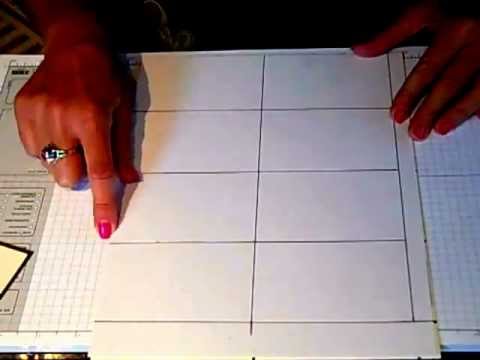
Whenever I came across a new word, I’d write it in the front in a large font. On the top right corner I’d write the word type (adjective/noun/verb); the top part would be its pronunciation, and the bottom would be example sentences in tiny fonts. These examples were either from the source, or from the Oxford Advanced Learner’s Dictionary.
In the back, I’d look up some synonyms and write them all in (if the synonym itself was a new word, I’d write a separate card for that synonym). Then right below would be the English definition of that word. Very rarely, if it was a really obscure word, I’d have to note down the Vietnamese definition.
Every card took 3 – 5 minutes to be fully complete. The finished product looks something like this:
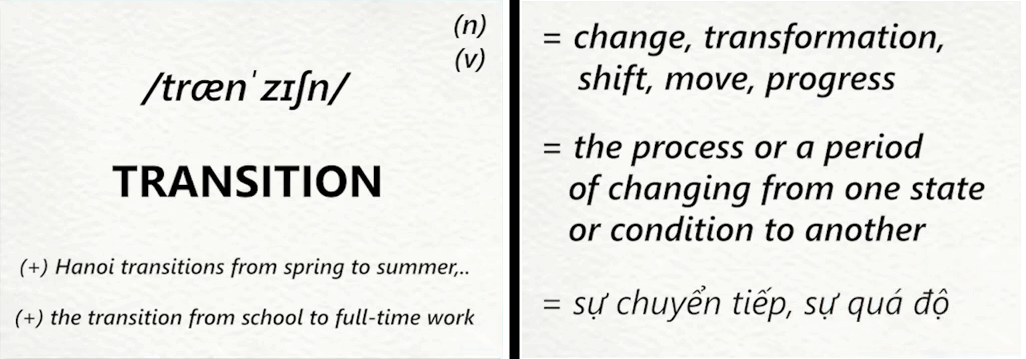
A crucial point here is that my original flashcards didn’t have the IPA transcription on top. In my initial years of studying English, I made the gigantic mistake of overlooking the importance of IPA. I wasn’t taught about it, and I never bothered to learn it. And so I’d ‘convert’ English phonetics into a Vietnamese equivalent.
So I’d transcribe the pronunciation of “transition” as “tran-zi-sừn”. Literally. Looks embarrassing as hell, but that was how I did it back then.
The following months, I made a point to write down every single new word I came across. Be it from a news article, Wikipedia, a book, a movie line, I’d write the word down. If I was watching a movie and a new word came up, I’d pause the movie, jot down a flashcard, and resume watching.
I remember buying a young adult English novel from FAHASA. It was the first English book I ever bought, and I was very determined to go through the entire novel. As soon as I opened the very first page, I was immediately overwhelmed by the sheer number of new words. There would be several every single sentence. It was an incredibly daunting task.
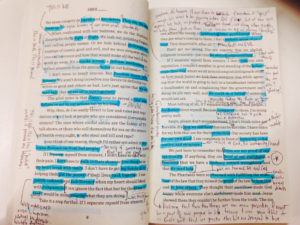
Still — I used a highlighter to note all the new words, and I’d write a flashcard for all of them. I was determined to — as I said to myself back then, in a Pokemon style — gotta write ’em all.
The Flashcard Routine
And there began my routine for the next couple of months that summer. I had lots of free time, which I decided to dedicate solely to writing flashcards.
- Every weekend, I’d sit down and pre-cut the flashcards. I’d prepare 200 – 300 cards for the week.
- Every day during the week I’d accumulate anywhere between 20 – 50 cards.
- On a peak day I recorded 100 cards! That’s only because I had been busy the previous day, and so I was determined to make up for it. I spent the entire day writing and writing, until it piled up to 100 new words.
- I carried a pack of flashcards with me anywhere, and I’d do revision anytime I could: on the bus, while waiting for dinner, before bed, and of course in the toilet. (I didn’t have a smartphone back then, so what the hell was I supposed to do??)
- I’d divide the flashcards into 3 packs, each bound by a rubber band: the ‘easy pack’ — the easiest to remember; the ‘tough pack’ — a bit harder; and the ‘every day pack’ — words I deemed most important and needed revisiting daily. I’d check the easy pack once a week, the tough pack once every 3 days, and the every day pack… well, every day.
It wasn’t perfectly consistent — there’d be days where I’d write over 50 cards, and days where I wrote none at all. But over the whole period, I averaged around 30 cards a day, and I made sure to do revision every single day. The majority of the cards went into the easy pack, so I’d say my retention rate was around 80%.
By the end of the summer of my 11th grade, I’d managed to write north of 2,000 flashcards. To get to this number, I had gone through innumerable news articles, about 10 different books, many many movies, and just as many Wikipedia articles. My reading abilities and my vocabulary had expanded immensely. By this time, I could read most books and browse any article on Wikipedia without trouble (except for the really technical ones).
Final Thoughts
To this day, I still look back on that period of intense flashcard-writing fondly. It really was the catalyst of my English going from mediocre to upper-intermediate level (my TOEFL score was 80 before, and after this period I re-took the test and got 103 — a jump from B1 to C1). I gained quite a bit of knowledge as a byproduct, and most of all — the ability to read any English source and material with ease is absolutely invaluable.
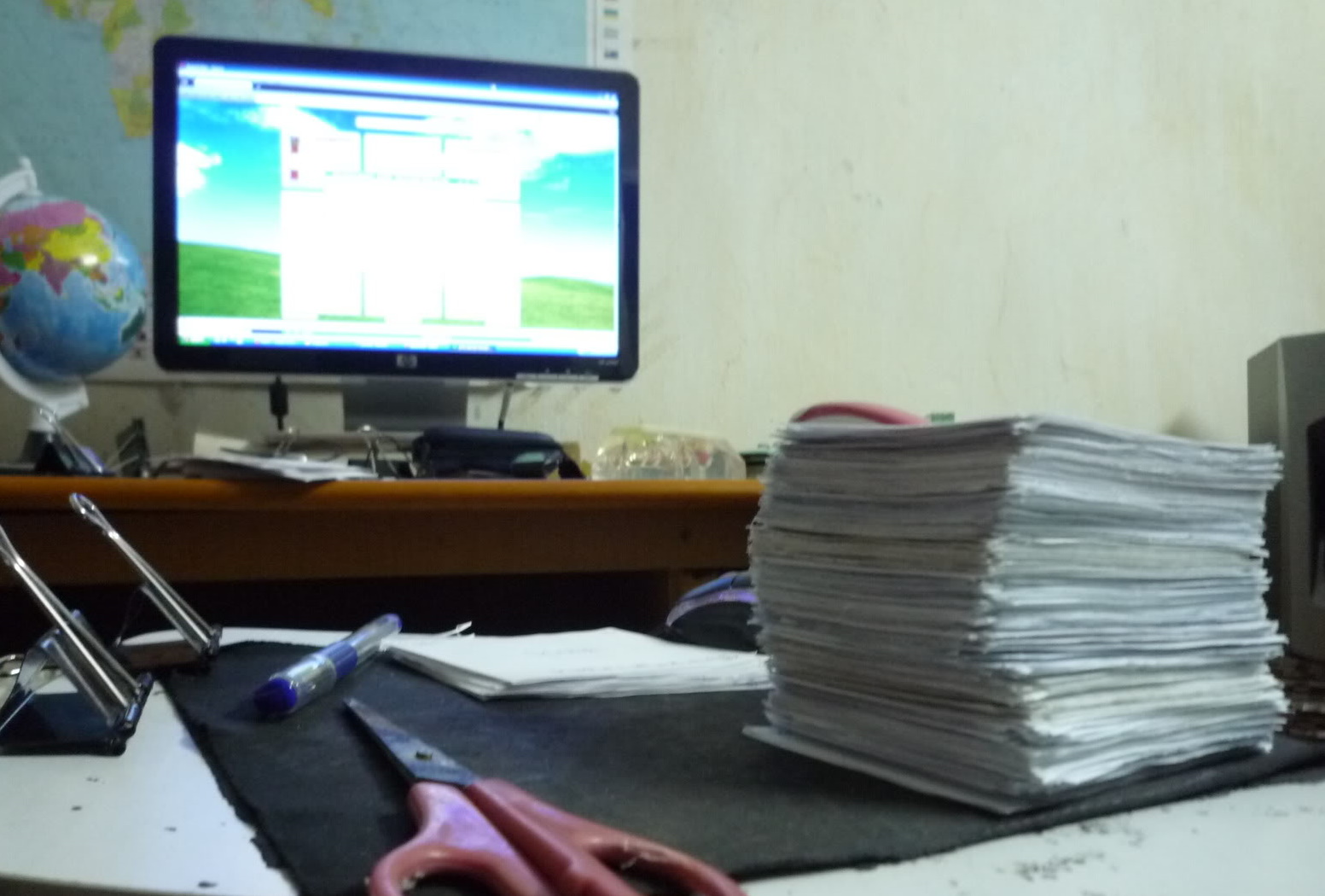
Also, looking at that pile of paper gives me an immense sense of pride. You know the pride you get when looking at a piece of puzzle you have spent days putting together? It’s like that, but x100! I genuinely considered those flashcards my little treasure. Sadly it’s been too long and I’ve lost all…
I fully credit those flashcards to being the main reason I was able to crack the C1 ceiling. During my teaching years, I always enthusiastically recommended flashcards to all of my students. If you’re reading this and you’re considering flashcards — not just for vocabulary learning but for anything that needs revising and memorising, then flashcards are your answer!
P.S I don’t recommend buying those pre-made flashcards. The act of physically writing something down is more beneficial to creating neural connections between your hand and your brain and helps retain the information much more deeply.