One of the most distinctive features of Hanoi is these Soviet-style apartment buildings, built between 1960 – 1990:
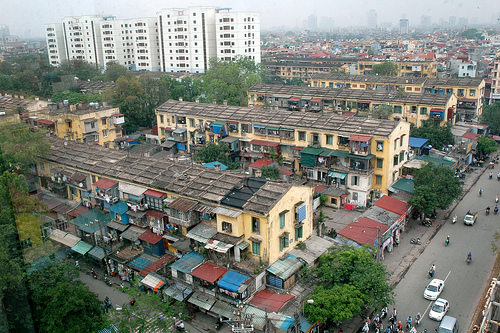
These buildings are modelled after the Khrushchyovka design in the USSR. In the 1950s, there was a severe housing shortage in the USSR; to combat this, Soviet architects employed the low-cost technology of putting together pre-made concrete slabs. This allowed them to roll out these building blocks with extreme efficiency. They decided elevators would be too costly, and so each building was limited at 5 floors so that residents could walk up.
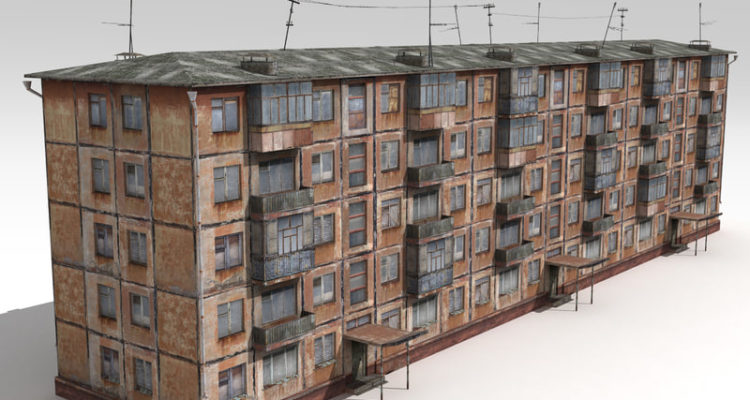
In Moscow alone, they constructed over 60,000 of these residential blocks in the 1960s. In Hanoi, there are now 1,500 of these buildings scattered around the city! I honestly didn’t expect there to be so many.
The ones built earlier in the 1960s tend to be the more decrepit of all. There’s a notorious one right in my neighbourhood which I will get to soon.
So I grew up in one of those 1,500 Soviet buildings. Each one is named by a letter – followed by a number to denote the “cluster”, or the neighbourhood, they belong to. Mine is called “E7” in the Quỳnh Mai cluster. There is also a E7 in Bách Khoa, Thành Công, Kim Liên, and most other neighbourhoods.

I moved here with my dad in 2001, so it’s been almost 20 years now. As with anything, there are certain pros and cons to living here.
The Good
The best thing about life here (or used to be) is the community. The apartment units share a common corridor that everyone must pass through before getting to their own home, meaning you come across your neighbours very frequently. You also see people walking up and down the stairs all the time, and over time you just remember everyone’s faces.
Originally, the residents were assigned apartments according to their government job. For example, the 8-3 neighbourhood next to mine consists of workers of the 8-3 textile factory; the Trung Liệt neighbourhood is for workers of the Bridge and Road Construction Company; some neighbourhoods are specifically for members of the police and military, and so on. My grandfather was working for the Ministry of Agriculture, and so he was assigned a unit in the Quỳnh Mai block.
What this means is that the residents of a block tend to have similar backgrounds — all are government workers of the same agency/company. This certainly fosters a stronger sense of community.
It also helps that during the government-controlled economic era, everyone was thought of as equals. Everything was rationed, and everyone was… equally poor. That’s communism in a nutshell, and an inadvertent effect is that the community solidarity was much stronger.
This is in contrast with life in a modern apartment building: from what I’ve heard, people tend to not know who their next-door neighbours are. You enter an elevator, get to your room, slam the door, and that’s it.
Another great aspect of life in these old buildings is that there is a sense of history and personality. The history part is obvious — built during a time of war and great hardship, these buildings now serve as a remnant of the failed economic experimentation Hanoi once attempted. Of course I’m not glamorising communism here, but history is history.
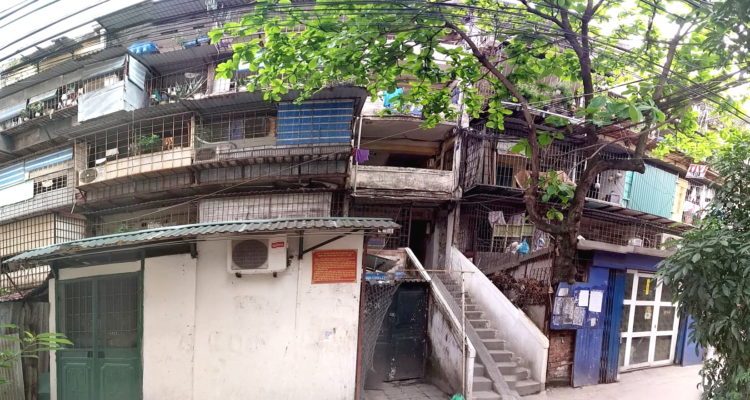
There’s also the unique aesthetics: since the floor area of an apartment unit is often very small (mine is 30 m²), people often (illegally) re-model their houses by building a “cage” that extends outwards. These cages, often crudely constructed with steel beams and aluminium walls, serve various functions: some are a mini garden, some a living area, some become a warehouse, and so on. My dad also built a cage in 2003 that becomes where I place my computer desk now.
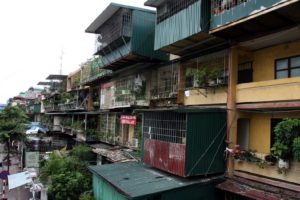
Even though there is an obvious safety hazard, it is undeniable that the chaotic nature of these DIY structures has given the old buildings a unique sense of personality. It’s old, it’s dilapidated, but… unique. Much more so than the bland looks found in most modern affordable high-rise apartment buildings I’d say.
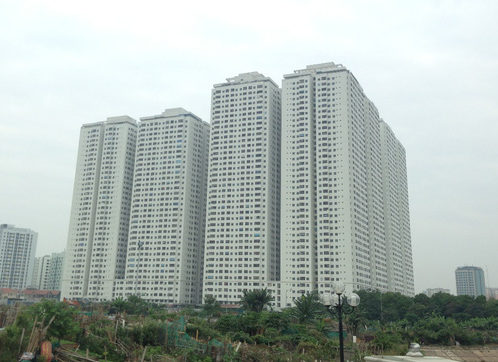
Well, that’s about all the good stuff. Here’s to the shittier parts of life here.
The Bad
I feel like since these buildings were constructed almost half a century ago, the most obvious drawbacks will be the lack of modern amenities.
First of all, these buildings were designed during a time when everyone rode a bicycle. That means no designated parking area (most modern high-rises have a basement parking lot). People would simply push their bicycle up to the 5th floor.
Nowadays, everyone has a motorbike though. Most people find a parking lot nearby. Some living on the 2nd and 3rd floor would push their bikes up, if they have the strength to. For me, I’m still pretty strong, so I can just push it all the way up to the 5th floor.
This is actually a very unique skill that only residents of the upper floors have. I can push any bike up — even that bigass dirt bike weighing over 150 kg!
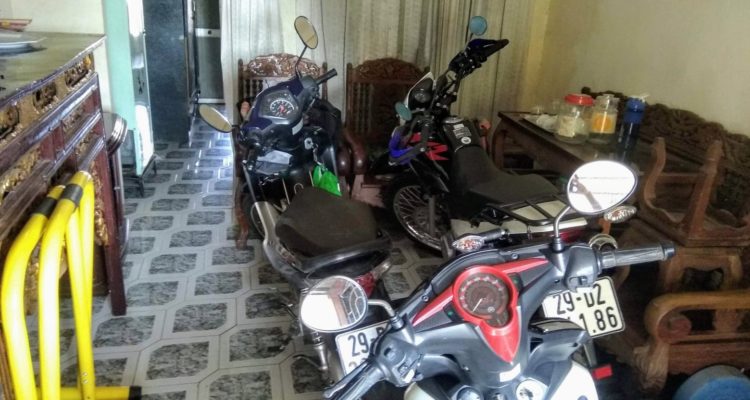
The worst part though is when I need to go out. I’d have to push my bike down… 5 floors, again. Yea, not fun in the summer or when you’re tired. Also when it rains and the stairway is wet, the bike can easily slide off to the side. Nightmare.
Another big problem is the lack of privacy. Each apartment unit is designed in a shared manner, i.e you can walk straight from one end to another. There are basically no separate rooms.
This is the floor plan of a typical 30 m² unit. My house is very similar to this:
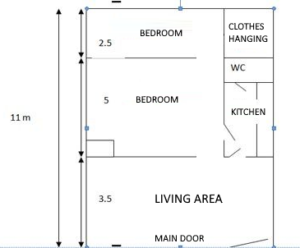
So what happens is you have to walk past your parents sleeping to get to your little room. To get to the restroom, you also have to walk through their room.
I guess this is great for the communal living style of the communist era. It also saves a lot of the cost to erect dedicated walls and install doors. The downside is that there is little privacy.
For me, growing up I’ve never really had the luxury of privacy. Most kids often have their own room with their own computer and study desk, their own bed, wardrobe, and toy/bookshelves. Well I don’t even have a room. Even right now I’m sharing a bed with my dad. The apartment really is that small.
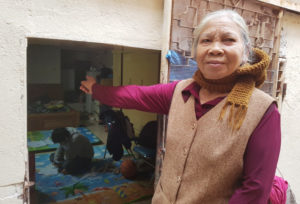
At least it’s only my and my dad, so it’s not too crowded. This woman lives in a 15 m² unit with 6 family members.
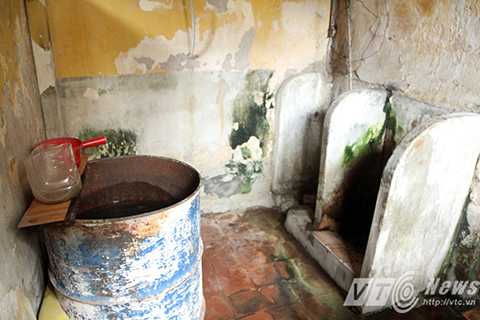
Speaking of poor living conditions, my building is actually fairly decent. It was built in the late 1970s, by which time each apartment had had its own bathroom area. The ones built in the 1960s? One bathroom for an entire floor to save on plumbing costs! Imagine the nightmare of having to share the toilet with 50 other people.
The C5 building in my neighbourhood is notorious as one of the most run down structures in Hanoi. The building has sunken several metres, meaning people on the first floor are actually living underground. The construction materials have all deteriorated so badly that people have to cover their heads so that the ceiling doesn’t fall down on them.
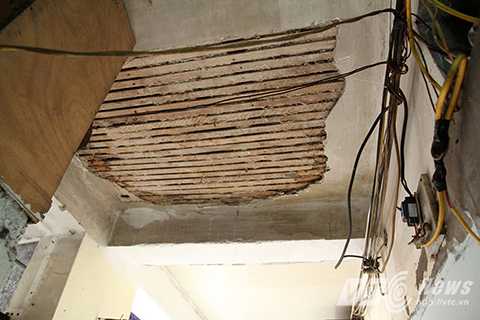
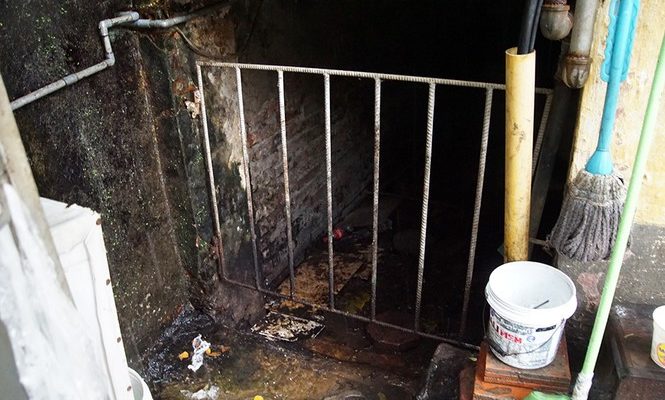
The picture above is the entry into the ground corridor of this building. It is underground, dark, wet, dilapidated, and smells horribly. When I was in primary school, the kids would make up urban legends about this entryway. We were reading too much Detective Conan at the time, and we would speculate there were dead bodies inside. One time, as a dare, one of my classmates managed to run about 5 metres inside before turning back and run out. Wild times.
Changing Times
Even though I value the community aspect of life in these buildings, I feel like it’s no longer true these days. Many people have moved out, some to modern apartment buildings to enjoy more spacious living. Many have rented out their old apartments. My dad is the only original resident of the 5th floor; everyone living here is now new tenants. Sometimes I’d see a new face as I come home, and we don’t really greet each other.
Another thing that I miss a lot is the spaces for kids to play. See those container-like rooms that protrude on the ground floor?
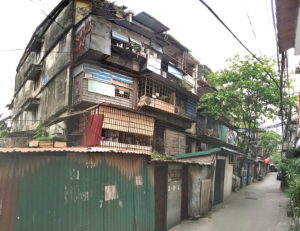
There used to be empty yards there. The kids in the neighbourhood would shoot marbles, play hide and seek, badminton, and so on.
And now, it’s all gone. The residents of the ground floor have all decided to illegally extend their house to occupy the yard area. I mean I don’t blame them — anyone living on the ground floor would do the same really. I’m just sad that the kids now have to play on the street.
Anyway, at the end of the day most people would prefer the conveniences of a modern apartment building. High-speed elevator, parking area, 24/7 security, playground for kids, spacious and private living, automatic rubbish disposal — who wouldn’t want all this?
For me though, I enjoy life here a lot. I wouldn’t trade it for a modern apartment. These Soviet buildings are a relic of a turbulent but interesting time in Hanoi’s history, and they should be preserved for future generations to better appreciate what their parents and grandparents have been through.
Ôi thật sự nhìn lại mà nhớ quá 😞 mình đã rời khỏi đây được mấy năm rồi, giờ đọc và thấy những tấm ảnh này tuổi thơ lại ùa về