
Sometimes I think about how almost impossible it is to commit a crime and not get caught these days. A perfectly calculated crime should leave nothing behind, but is this even possible?
In this day and age, we all inevitably leave a trace somewhere. And especially in a country with law enforcement omnipresent like Vietnam, getting caught is simply a matter of time no matter how impossible a case seems.
Cameras Everywhere
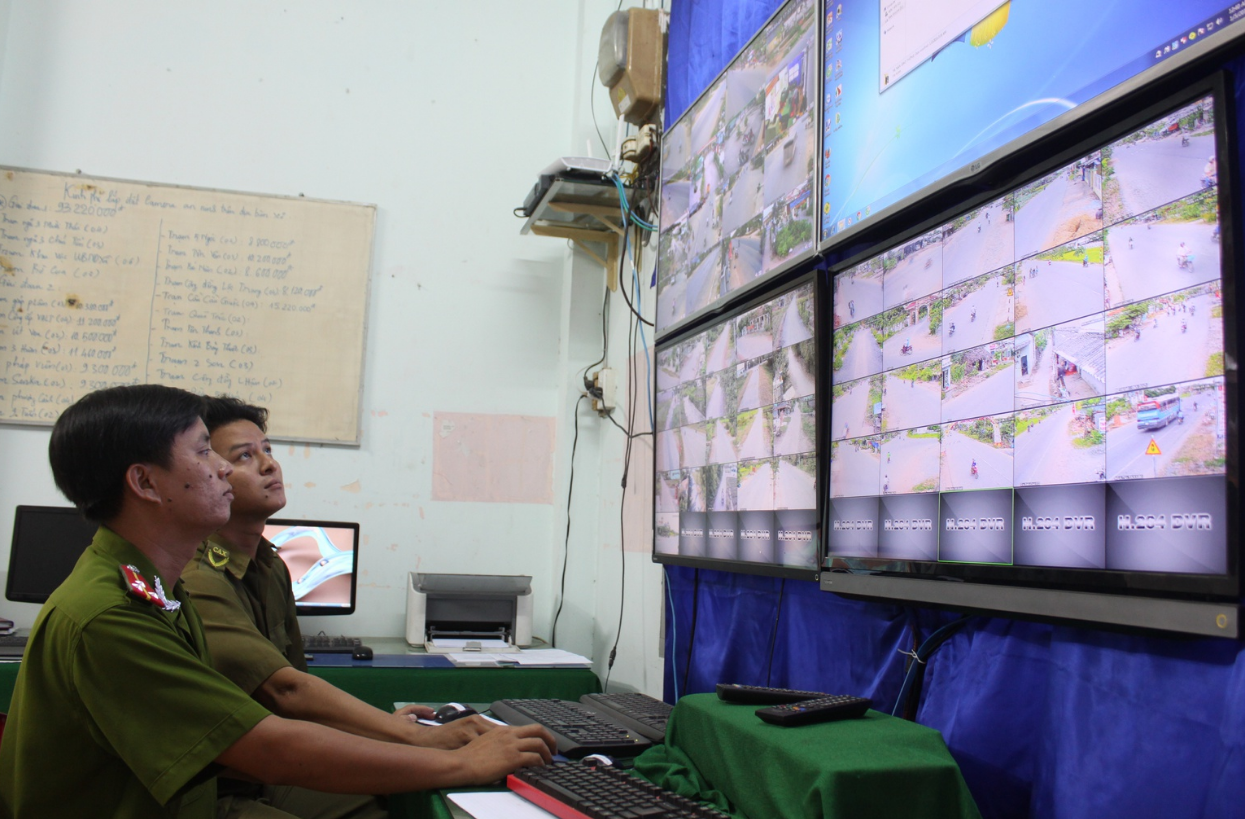
For many cases, there is seemingly no evidence at all… except for the cameras! With almost every house and every business having a camera on their front door, every intersection having a traffic cam, anyone travelling in the street can be recorded.
In this robbery & rape case, for instance, the perpetrator was a random passer-by. He noticed that this clinic had only a female doctor who worked and slept there overnight. So one day, at 1 am, he broke in, bound and gagged the doctor, raped her, and stole her money. He promptly left. The woman screamed for help at 5 am, by which point the criminal had already been far gone.
This seems like an impossible case: there was no description of the burglar; the clinic and the neighbouring houses did not have security cameras, and the victim had no personal connection to him. How would they even begin to find leads?
So the police looked at footage from the traffic cameras, and voila — they got him! After 10 days, the guy was caught.
In this hit and run case, a dead body was found in the street. The victim apparently died from a traffic collision. The vehicle had left the scene. There were no witnesses.
If this was 10 years ago, there are very high chances that this would have gone unsolved. But it was 2016, and the police looked at the traffic cameras. They promptly caught the driver. He had been trying to wash off the blood from his car too.
In this purse snatching case, a motorcycle thief stole from a woman in a rural road. He drove to an empty highway and stopped to check the contents of the bag. He was caught because a random home camera saw him!
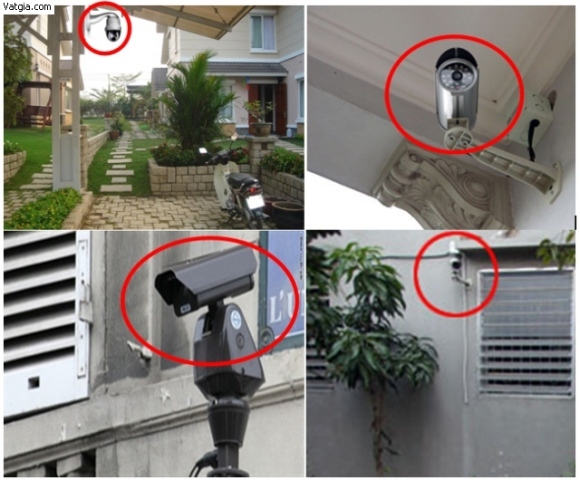
So, how do you go about doing anything and expect not to be recorded by a camera somewhere?
Digital Trace
Of course in remote rural roads there are likely no cameras. But there will always be physical evidence at the crime scene — personal items, fingerprints, footprints, blood stains, DNA evidence, etc. In most cases, the police can simply map out a list of the victim’s relationships, and proceed with the most suspicious leads.
But what if the criminal barely knows the victim and leaves no trace behind?
Well, there are probably digital footprints. Before you rob, murder, or discuss your criminal intents with a conspirator, you probably have sent a text, somewhere. And that can be enough for the police to catch you.
In this murder case, the victim was stabbed to death in a remote rubber plantation. It was in the evening and there were no witnesses. The police could not identify any suspicious relationships the victim might have. There were no leads to the murderer at all.
Except for when they examined the victim’s phone and found a suspicious text from someone named “Dung”. They immediately profiled everyone named “Dung” in the local area (this was before every mobile number had to be registered with an ID). And well, they quickly found the real “Dung” killer. He had only known the victim for a short time, which is why nobody knew about him. He almost got away but was eventually caught, all because of a text.

In this similar murder case, a witch doctor was found stabbed to death. This was an extremely wealthy man who wore flashy gold jewelry; he was very well-known in the local area, and he also happened to be a promiscuous homosexual who slept around with many men. Again – no physical evidence at the scene, and his complicated personal network only made it harder for the investigation.
The police asked local people and identified a man who had seen the victim a day before. The man said when he was at the victim’s place, the victim borrowed his phone to send a text. The text was to schedule a meet-up with someone. The police found the guy who received the text, who turned out to be the actual killer. Again, the killer almost got away if it was not for the unfortunate text.
I found so many cases where the investigation was seemingly running into a dead end due to a lack of physical evidence, but was then unravelled all thanks to a text.
And sometimes, it doesn’t even have to be a text. In this shooting case in the US, a man was shot to death in his home. His wife claimed that her husband was shot by a masked intruder who broke into their home. But when the police seized her phone, they found that she had searched the phrase “how to kill someone and not get caught” on Google only a couple of days before. That’s… a massive coincidence.
Most crimes happen between people who know each other, which means there must be some form of communication between them somewhere. And even if the phones are completely destroyed, the police can still obtain records of people’s text/call history from the telecom. This makes it nearly impossible to truly cover your tracks.
The only exception is a completely random crime where there truly is zero connection between the victim and the perpetrator, which is another matter entirely.
Police Everywhere
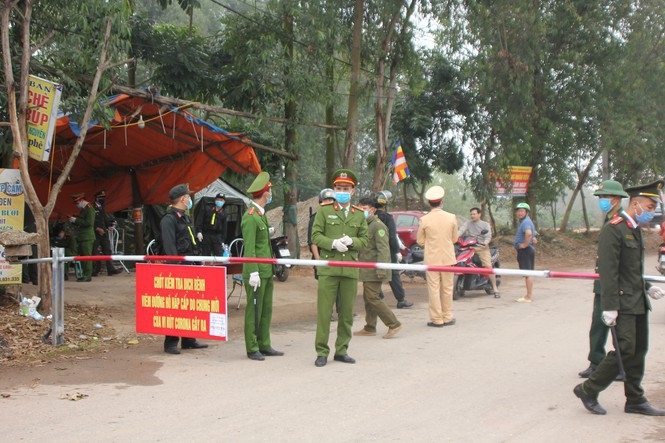
Aside from the difficulty of evading cameras and digital traces, another factor that I believe makes it impossible for criminals to escape is the size of the police force in Vietnam.
A friend of mine is a police officer, and he tells me that there are about 300,000 full-time police officers in Vietnam. That’s not a really large number considering our 100M population.
But there is also the part-time “civil defence” force (dân phòng). They are a voluntary force that assists the regular police in maintaining social order, and they number 750,000.
So that is a 1M+ strong and well-equipped security apparatus all ready to be mobilised. They are constantly active, checking on the local residents and keeping track of what’s happening in their jurisdiction. With such an omnipresence of law enforcement personnel, there is no way a wanted criminal can evade capture for long.
Just Don’t Do It
Of course there will always be extremely sophisticated crimes, unsolved cases, corruption, or misconducts during investigation that let the real criminal walk free. But for the most part, I firmly believe it is nearly impossible to commit a crime and not get caught. No matter how well thought-out the plan might be, there will be a hole somewhere.
Vietnam is a police state that closely monitors its citizens. There are both pros and cons to this, but from the perspective of maintaining social order and deterring crime, it’s definitely a good thing. At least, the near-certainty of getting caught will make any would-be criminal think twice. “Don’t do the crime if you can’t do the time”.